Communication
EARLY BIRD on a wide range of Specializing Master’s programs starting next year


POLI.design Summer Schools offer immersive, high-level training experiences that deepen your knowledge of design disciplines through a blend of lectures, workshops, field visits, and project work. Hosted in Milan, the global capital of design and creativity, these programs give international participants the chance to engage with cutting-edge design practices, explore Italian excellence, and develop professional skills in a dynamic, collaborative environment.
Participants can choose from three different programs, each tailored to a specific area of design expertise:
Total Milan Design is a two-week intensive summer school at POLI.design, the design-led institution of Politecnico di Milano, that takes you across six interconnected design disciplines in one immersive program. With a global perspective and a transdisciplinary approach, this course is built for curious, creative minds who want to understand how design is transforming the world — and where it’s heading next.
Playgrounds & Playscapes is a two-week intensive summer workshop at POLI.design, the design-led institution of Politecnico di Milano, that explores the powerful — and often overlooked — relationship between play, landscape, and urban life. Through a blend of history, critical theory, and hands-on design practice, this course invites you to rethink public space as a place of freedom, imagination, community, and regeneration.
DOORS is a five-day immersive summer school that navigates to the very origin of the idea: the threshold where function meets spectacle, and where creative courage meets craft. Beginning at the POLI.design campus in Milan and continuing between MAUTO — Museo Nazionale dell’Automobile in Turin and the legendary Studio Marcello Gandini in Almese, this program offers a journey unlike any other summer school — one that is as much about place and story as it is about design.
All classes will be held at Politecnico di Milano – Bovisa Campus, with opportunities to work directly with renowned professors and design professionals. Each program features exclusive field visits to iconic design venues and concludes with a final project presentation and celebration event — a chance to showcase your work, connect with peers, and expand your international network.
40 Hours | 2 Weeks
July 20 – July 31, 2026 · Milan, Italy
What if you could explore fashion, interiors, product, digital, and sensorial design — all in one course, all in Milan?
Total Milan Design is a two-week intensive summer school at POLI.design, the design-led institution of Politecnico di Milano, that takes you across six interconnected design disciplines in one immersive program. With a global perspective and a transdisciplinary approach, this course is built for curious, creative minds who want to understand how design is transforming the world — and where it’s heading next.
You don’t need to be a design student to join. Open to bachelor’s and master’s students from all academic backgrounds, as well as recent graduates and young professionals, this program brings together an international community of participants passionate about creativity, innovation, and Italian design culture. Over two weeks in the heart of Milan — the world capital of design — you’ll attend masterclasses with leading Politecnico professors, visit iconic design destinations, and collaborate with peers from around the globe on a hands-on creative project.
The course is structured around six thematic modules, each offering a unique lens on contemporary design practice and its evolution. Together, they form a kaleidoscopic journey through the full landscape of design today.
Fashion Design — Transitions and Mutations Explore how fashion is being radically redefined through sustainability, identity, technology, and new creative codes that challenge convention.
Interiors & Furniture Design — New Codes, New Evolutions Investigate how living spaces, objects, and environments are evolving through innovative materials, cultural shifts, and emerging Italian design philosophies.
Sensorial Design — Where Human Perception Meets Creative Innovation Discover the intersection of neuroscience, human senses, and design thinking — and how designers are using sensory experience to create deeper connections.
Design Thinking — Strategy and Practical Progress Apply design thinking methodologies to real-world challenges through collaborative, practice-driven workshops and problem-solving sessions.
Digital Design — Transitions and Transcendence Navigate the digital frontier of design — from AI-powered tools and immersive technologies to new paradigms reshaping creative practice.
City Trends Safaris & Future Forecasting Take to the streets of Milan for guided trend explorations, combining on-the-ground observation with foresight methodologies and futures analysis.
This is a 40-hour intensive program delivered over two weeks, combining multiple learning formats for a rich, varied experience.
Lectures and Masterclasses At least three masterclasses are delivered by professors from Politecnico di Milano, alongside sessions by PhD researchers, visiting academics, and industry professionals. The format blends theory, interactive discussion, case studies, and applied exercises.
Field Visits Across Milan Four curated visits take you inside Milan’s most inspiring design spaces — from museums, foundations, and archives to showrooms, flagship stores, production houses, and creative agencies. Every visit is guided by a member of the academic team and is an integral part of the learning experience.
Team-Based Final Project Working in interdisciplinary teams, you’ll develop a creative project responding to a real design brief. The final day culminates in a public presentation of all projects, followed by a certificate ceremony and a celebratory aperitivo. The goal is to produce a tangible, portfolio-ready outcome — a project you can proudly showcase after the course.
At the end of the program, every participant receives:
Total Milan Design is open to students currently enrolled in a bachelor’s or master’s program, recent graduates, and young professionals who have a background in or are passionate about design. A minimum English proficiency of B1 is required. No specific design degree is necessary — the interdisciplinary nature of the course welcomes participants from all fields.
Course Dates: July 20 – July 31, 2026 Application Deadline: June 15, 2026 (registration is completed upon full payment)
€2,300 (including 22% VAT), payable in a single installment through the dedicated payment portal. Full details are available in the registration form.
By completing the payment, you agree to the terms and conditions.
Milan is an exciting city to explore — and it doesn’t have to break the bank. Here’s a realistic estimate of what two weeks will cost you, excluding accommodation and travel to/from Milan.
| Category | Budget-Friendly | Comfortable | Livig It Up |
| Food & drinks | €250 – €300 | €350 – €450 | €500 – €650 |
| Local transport (metro, tram, bus) | €30 – €40 | €40 – €50 | €50 – €60 |
| SIM card / mobile data | €15 – €20 | €20 – €30 | €20 – €30 |
| Entertainment & going out | €80 – €120 | €150 – €200 | €250 – €350 |
| Personal & miscellaneous | €50 – €70 | €80 – €100 | €100 – €150 |
| Estimated Total (2 weeks) | €425 – €550 | €640 – €830 | €920 – €1,240 |
A few insider tips: breakfast in Milan is an espresso and a cornetto at the bar for €2–3. A solid lunch at a trattoria or cafeteria runs €8–12. Dinner at a pizzeria will cost you €15–25, while a nice restaurant is more like €30–50. Public transport is excellent and affordable — a weekly pass is around €17, and most of the city is walkable. For groceries, supermarkets are your best friends, and cooking a few meals at home can stretch your budget significantly. Milan also offers a wealth of free things to do: from aperitivo culture (where drinks come with generous buffets) to free museum days and beautiful parks. You’ll spend less than you think — and enjoy every euro.
Overall, plan for approximately €450 – €1,250 for two weeks depending on your lifestyle. The lower end is realistic if you cook some meals at home and keep evenings relaxed; the higher end covers eating out most days and enjoying Milan’s nightlife and cultural scene fully.
We’ve partnered with Aparto to offer our students dedicated accommodation at a special rate during the program.
Dates: Check-in Sunday, July 19 — Check-out Saturday, August 1, 2026
Room options:
All rooms include an en-suite bathroom and a kitchenette, so you can cook when you feel like it and save on meals. The residence also offers 24-hour reception, weekly cleaning, and full access to common areas including a study room, gym, cinema room, and video games room.
After completing your Summer School enrollment with POLI.design, you will receive a dedicated link to book your accommodation. Spots are limited and assigned on a first-come, first-served basis.
Milan isn’t just a city — it’s a living design laboratory. Home to Salone del Mobile, Fashion Week, and the world’s most iconic design brands, it’s the place where trends are born and creative boundaries are pushed every day. POLI.design, Founded by Politecnico di Milano — one of Europe’s top technical universities — puts you at the center of this ecosystem, with direct access to world-class faculty, industry connections, and a city that breathes design.
This summer, go beyond a single discipline. Explore the full spectrum of design — in the city that continues to redefine it.

40 Hours | 2 Weeks
July 20 – July 31, 2026 · Milan, Italy
What happens when we stop thinking of play as something for children — and start seeing it as a force that can reshape how cities work?
Playgrounds & Playscapes is a two-week intensive summer workshop at POLI.design, the design-led institution of Politecnico di Milano, that explores the powerful — and often overlooked — relationship between play, landscape, and urban life. Through a blend of history, critical theory, and hands-on design practice, this course invites you to rethink public space as a place of freedom, imagination, community, and regeneration.
This isn’t just about designing playgrounds. It’s about understanding play as a relational practice — one that connects space, body, and community — and using it as a lens to critically read, reimagine, and revitalize the contemporary city.
Open to students and young professionals from all backgrounds — architecture, landscape design, urban planning, art, fashion, education, and beyond — this program is built on the conviction that the best ideas emerge when different disciplines think together.
The course unfolds across three interconnected layers: understanding, analyzing, and designing.
Play and the City — A History Trace the evolution of play in urban contexts, from early playground movements to today’s most radical playscapes. Understand how the spaces we design for play reveal deeper truths about how we conceive of public life.
Landscape Meets Play — Critical Perspectives Engage with key theories on landscape and play, and discover how architects, landscape designers, artists, educators, and communities have challenged purely functional conceptions of urban space — proposing models grounded in freedom, shared experience, and imagination.
Multidisciplinary Design in Action Study real-world design experiences from across disciplines — architecture, landscape architecture, fashion design, art, and community practice — that illustrate how play-driven interventions can redefine the idea of the city.
Urban Analysis Through the Lens of Play Learn to critically read urban contexts and public spaces, identifying design opportunities where play can act as a catalyst for social connection, rest, learning, and regeneration.
Designing Playscapes — From Concept to Intervention Work hands-on to develop urban design interventions at multiple scales, integrating functional, artistic, and social dimensions with careful attention to the relationships between space, body, and community.
This is a 40-hour intensive workshop delivered over two weeks, designed to balance theory, critical analysis, and creative making.
Lectures and Masterclasses At least three masterclasses are delivered by professors from Politecnico di Milano, complemented by sessions with PhD researchers, visiting academics, and professionals working at the intersection of design, art, and urban practice. Lectures are supported by rich multimedia materials and followed by open discussions that encourage the exchange of perspectives.
Field Visits Across Milan Four curated visits take you into Milan’s public spaces, parks, cultural institutions, and urban landscapes — observed not as tourists, but as designers. Each visit is guided by a member of the academic team and serves as both inspiration and research material for your project work.
Team-Based Final Project In multidisciplinary groups, you’ll develop a design proposal for an urban intervention that uses play as its driving principle. The final day is dedicated to public presentations, followed by a certificate ceremony and a celebratory aperitivo. The aim is to produce a tangible, portfolio-ready outcome — a project that integrates spatial, social, and artistic thinking into one compelling proposal.
By the end of the course, you’ll be equipped to:
At the end of the program, every participant receives:
Playgrounds & Playscapes is open to students currently enrolled in a bachelor’s or master’s program, recent graduates, and young professionals from any discipline — architecture, landscape design, urban planning, art, fashion, education, social sciences, and more. A minimum English proficiency of B1 is required. No specific design background is necessary — the interdisciplinary spirit of the course is its greatest strength.
Course Dates: July 20 – July 31, 2026 Application Deadline: June 15, 2026 (registration is completed upon full payment)
€2,300 (including 22% VAT), payable in a single installment through the dedicated payment portal. Full details are available in the registration form.
By completing the payment, you agree to the terms and conditions.
Milan is an exciting city to explore — and it doesn’t have to break the bank. Here’s a realistic estimate of what two weeks will cost you, excluding accommodation and travel to/from Milan.
| Category | Budget-Friendly | Comfortable | Livig It Up |
| Food & drinks | €250 – €300 | €350 – €450 | €500 – €650 |
| Local transport (metro, tram, bus) | €30 – €40 | €40 – €50 | €50 – €60 |
| SIM card / mobile data | €15 – €20 | €20 – €30 | €20 – €30 |
| Entertainment & going out | €80 – €120 | €150 – €200 | €250 – €350 |
| Personal & miscellaneous | €50 – €70 | €80 – €100 | €100 – €150 |
| Estimated Total (2 weeks) | €425 – €550 | €640 – €830 | €920 – €1,240 |
A few insider tips: breakfast in Milan is an espresso and a cornetto at the bar for €2–3. A solid lunch at a trattoria or cafeteria runs €8–12. Dinner at a pizzeria will cost you €15–25, while a nice restaurant is more like €30–50. Public transport is excellent and affordable — a weekly pass is around €17, and most of the city is walkable. For groceries, supermarkets are your best friends, and cooking a few meals at home can stretch your budget significantly. Milan also offers a wealth of free things to do: from aperitivo culture (where drinks come with generous buffets) to free museum days and beautiful parks. You’ll spend less than you think — and enjoy every euro.
Overall, plan for approximately €450 – €1,250 for two weeks depending on your lifestyle. The lower end is realistic if you cook some meals at home and keep evenings relaxed; the higher end covers eating out most days and enjoying Milan’s nightlife and cultural scene fully.
We’ve partnered with Aparto to offer our students dedicated accommodation at a special rate during the program.
Dates: Check-in Sunday, July 19 — Check-out Saturday, August 1, 2026
Room options:
All rooms include an en-suite bathroom and a kitchenette, so you can cook when you feel like it and save on meals. The residence also offers 24-hour reception, weekly cleaning, and full access to common areas including a study room, gym, cinema room, and video games room.
After completing your Summer School enrollment with POLI.design, you will receive a dedicated link to book your accommodation. Spots are limited and assigned on a first-come, first-served basis.
Milan is a city that constantly reinvents its public spaces — from the regeneration of former industrial districts to bold new parks and cultural hubs. It’s a living laboratory for urban design, and the perfect backdrop for rethinking the role of play in city life. POLI.design, the Founded by Politecnico di Milano — one of Europe’s top technical universities — gives you direct access to world-class faculty, cutting-edge research, and a city where design isn’t just studied, it’s lived.
This summer, look at the city differently. Design the spaces where play, community, and imagination come alive.
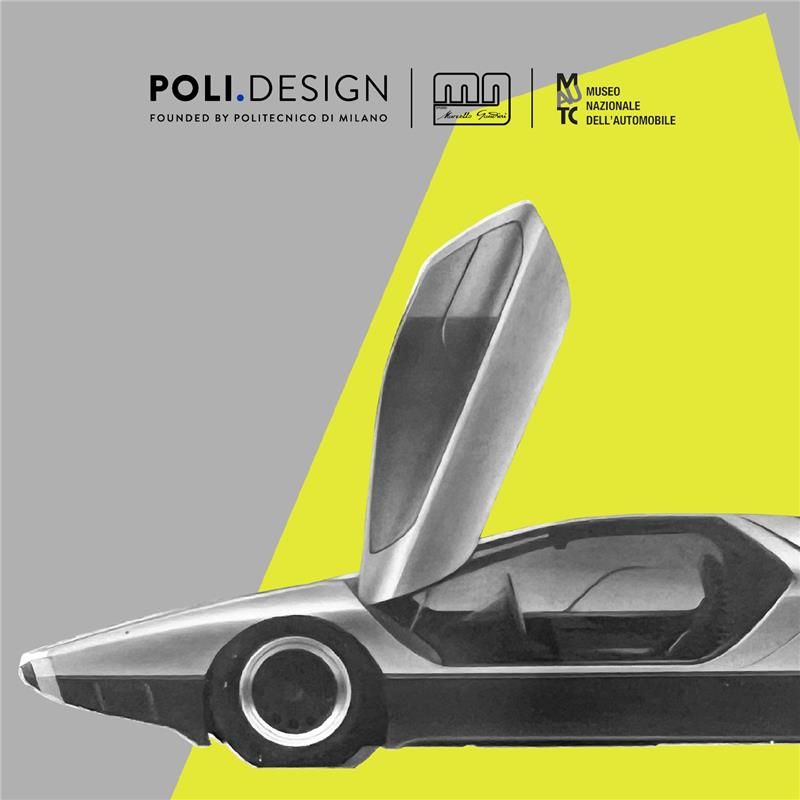
A Summer School organized by POLI.design – Founded by Politecnico di Milano, MAUTO – Museo Nazionale dell’Automobile and Studio Marcello Gandini.
30 Hours | 1 Week
July 16 – July 22, 2026 · Milan + Turin, Italy
A door is never just a door. It opens and closes. It reveals and conceals. It connects inside and outside, public and private, past and future. It frames a landscape, stages a gesture, and — in the hands of a visionary designer — becomes a portal of invention.
But before a door closes, it opens. Every great design begins with an opening: an opening of the mind, an opening toward the unknown, an opening that makes room for what didn’t exist before. The act of opening is the first creative act — before the sketch, before the model, before the material takes shape. To open is to choose possibility over certainty, curiosity over comfort.
The central theme is the threshold itself — explored across architecture, mobility, and supercar design: a filter, a frame, a theatrical device for revelation, refuge or prison, transparent or armored — a portal between cultures and eras.
DOORS is a five-day immersive summer school that navigates to the very origin of the idea: the threshold where function meets spectacle, and where creative courage meets craft. Beginning at the POLI.design campus in Milan and continuing between MAUTO — Museo Nazionale dell’Automobile in Turin and the legendary Studio Marcello Gandini in Almese, this program offers a journey unlike any other summer school — one that is as much about place and story as it is about design.
Inspired by the iconic scissor doors first introduced by Marcello Gandini with the Alfa Romeo Carabo in 1968, the course develops a progressive, hands-on design journey: from idea to sketch, from sketch to cardboard model — with nothing more than a pencil, to preserve the purity of the idea before any complex technology enters the process. Each participant documents this journey in a personal logbook, where every page becomes a door, revealing the exploratory phases of the project.
POLI.design is the international postgraduate hub of the Politecnico di Milano Design System — ranked 1st in Italy, 1st in the EU, and 6th worldwide in Arts & Design (QS World University Rankings 2025).
Founded in 1999 by Politecnico di Milano, POLI.design brings together polytechnic research and real-world practice through a project-based learning approach that spans industries and disciplines. Its portfolio of Specializing Masters, Executive Courses, and tailored programs for companies and institutions is designed to equip students and professionals with the design mindset needed to lead meaningful transformation.
Sitting at the crossroads of academia, industry, and institutions — in the heart of Milan, the world capital of design — POLI.design offers a uniquely connected learning experience for anyone ready to think, create, and innovate at the highest level.
Marcello Gandini (1938–2024), a legendary automobile designer, revolutionized car design for over six decades. Widely regarded as the father of the supercar, his work spans high-performance vehicles, city cars, scooters, helicopters, boats, furniture, and pioneering engineering innovations. Iconic models include the Lamborghini Miura and Countach, Marzal, Espada, Alfa Romeo Carabo, Lancia Stratos HF and Zero, Maserati Shamal and Quattroporte IV, Audi 50/VW Polo, Renault Supercinq, Diablo, Cizeta V16T, Renault Magnum truck, among many more.
His studio in Almese (To) was, for over forty years, the beating heart of his creativity—a space imbued with a unique aura, a true symbol of innovation and passion. What was once his daily workplace has become after his passing a place outside of time: it preserves its original spirit while at the same time projecting his message and vision into the future. The studio embodies the almost magical transition from thought to creation, the very core of his philosophy: the importance of the original idea, that passes directly from the mind to the pencil, before evolving through advanced technologies. Today we invite you to get lost among his drawing tables, searching for the very essence of your creativity.
A historical collection, unique in the world. A journey through history that tells how the automobile has influenced fashions, costumes, art languages, scientific research and technological achievements, driven by a constant innovative impulse. A place of debate and experimentation that, starting from the enhancement of the preserved heritage, produces new content capable of speaking the languages of contemporaneity. MAUTO – Museo Nazionale dell’Automobile is a reference point for the promotion of automotive culture, expressed through creative exchanges with all fields of knowledge.
Within this vision, the museum stands as a reference point for the promotion of automotive culture, encouraging creative exchanges across all fields of knowledge. One of the spaces where this dialogue finds expression is Spazio Design, a new 1,600-square-meter exhibition area, divided into a permanent educational space and another dedicated to temporary exhibitions and rotating thematic displays. It offers an engaging narrative designed to provide the public with an always up-to-date reading of car design, transversal to the history of industry, manufacturing and product design.
The course unfolds as a progressive journey — five days, two cities, three extraordinary locations — where each step builds on the last.
Days 1–2 · Milan — POLI.design Campus (Thursday–Friday) The journey begins at POLI.design – Founded by Politecnico di Milano with lectures and masterclasses that set the theoretical and creative framework. You’ll explore the door as a design concept — opening and closure, filter between interior and exterior, scenic device, framing of landscape, threshold of invention.
Days 3–5 · Turin Region — MAUTO & Studio Gandini (Monday–Wednesday) The course moves to Turin and its surroundings. At MAUTO, you’ll explore the exhibition halls, archives, and Design Space, studying how doors have evolved across the history of the automobile — from carriages to contemporary supercars. At Studio Marcello Gandini in Almese — set in a stunning natural landscape just outside Turin — you’ll work hands-on in the creative environment where some of the most iconic cars in history were conceived. Here, you’ll bring your final project to life. We won’t spoil the brief — but trust us, it’s worth the wait.
This is a 30-hour intensive program delivered over five working days (excluding the weekend), combining theoretical exploration, immersive cultural visits, and hands-on design practice.
Lectures and Masterclasses Classes are held by professors from POLI.design – Founded by Politecnico di Milano, alongside researchers, automotive designers, and industry professionals. The program also features contributions curated by MAUTO’s design team, offering unique insight into the museum’s collections and archives, and by professors and professionals who represent Marcello Gandini’s legacy, bringing first-hand knowledge of the maestro’s creative philosophy and working methods. Topics span the technology, ergonomics, and cultural implications of door design, as well as the broader meaning of thresholds in design and contemporary culture.
Immersive Visits MAUTO’s exhibition route, archives, and new Design Space provide unparalleled access to over a century of automotive design history. Studio Marcello Gandini in Almese offers a rare, intimate encounter with one of the most significant design studios in the world, surrounded by an extraordinary natural setting.
Hands-On Design Work The course is deliberately analog. From idea to sketch, from sketch to prototype — the process uses only pencil and hands, preserving the purity of the creative act. Each participant keeps a personal logbook throughout the course, where every page becomes a door and revelation of the project’s evolving phases.
Final Booklet The entire experience will be documented in a final booklet capturing the journey, the ideas, and the outcomes. Every participant will receive a digital copy as a lasting record of the course.
By the end of the course, you’ll be equipped to:
At the end of the program, every participant receives:
DOORS is open to students currently enrolled in a bachelor’s or master’s program, recent graduates, and young professionals from any discipline — design, automotive engineering, art, fashion, architecture, interior, product, and more. A minimum English proficiency of B1 is required. No specific design background is necessary — the course is designed to be accessible to anyone with curiosity and a willingness to work with their hands.
Course Dates: July 16–17, 2026 (Milan) + July 20–22, 2026 (Turin) Weekend off: July 18–19 Application Deadline: June 15, 2026 (registration is completed upon full payment)
€1,700 (including 22% VAT), payable in a single installment through the dedicated payment portal. Full details are available in the registration form.
By completing the payment, you agree to the terms and conditions.
Since this course splits across Milan and Turin, here’s a realistic estimate for the full week, excluding accommodation and travel to/from Italy.
| Category | Budget-Friendly | Comfortable | Living It Up |
|---|---|---|---|
| Food & drinks (beyond included meals) | €100 – €150 | €150 – €220 | €250 – €350 |
| Local transport | €20 – €30 | €30 – €40 | €40 – €50 |
| SIM card / mobile data | €15 – €20 | €20 – €30 | €20 – €30 |
| Entertainment & going out | €40 – €70 | €80 – €120 | €150 – €200 |
| Personal & miscellaneous | €30 – €50 | €50 – €70 | €70 – €100 |
| Estimated Total (1 week) | €205 – €320 | €330 – €480 | €530 – €730 |
Regional Trains between Milano Torino costs €12,75. Keep in mind that breakfast and lunch are included for the three days in Turin, which significantly reduces your food costs for over half the course. Milan and Turin are both excellent cities for eating well on a budget — an espresso and cornetto will run you €2–3, a lunch at a trattoria €8–12, and a dinner at a pizzeria €15–25. Turin in particular is famous for its aperitivo culture and its incredibly affordable yet high-quality food scene.
This course doesn’t just take place in two cities — it tells a story through them. Milan, the world capital of design, provides the theoretical and cultural launchpad at POLI.design – Founded by Politecnico di Milano. Turin, the birthplace of Italian automotive culture, provides the hands-on, immersive creative core. And Almese, a small town nestled in the mountains just outside Turin, offers the rare privilege of working inside the studio where some of the most iconic cars in history were designed. Three spaces, one journey: from the classroom to the archive to the workshop, where every door opens a new way of seeing
This summer, find the door of your own talent — and have the courage to open it.